Carpet Care Guide
How to Take Care of Your Handmade Rugs
Preserve the beauty and value of your authentic Egyptian rugs with our comprehensive care guide, featuring centuries-old preservation techniques and modern maintenance methods.
By Dr. Ibrahim · Egyptian Rugs Australia — Rug preservation specialist with 40+ years of hands-on experience in traditional Egyptian weaving and restoration.
The Evolution of Egyptian Handmade Rugs
From ancient pharaonic designs to contemporary luxury pieces, discover how Egyptian rug craftsmanship has evolved while preserving authentic heritage and artistic excellence.
🏛️ Ancient Origins
3000 BCE - 500 BCE
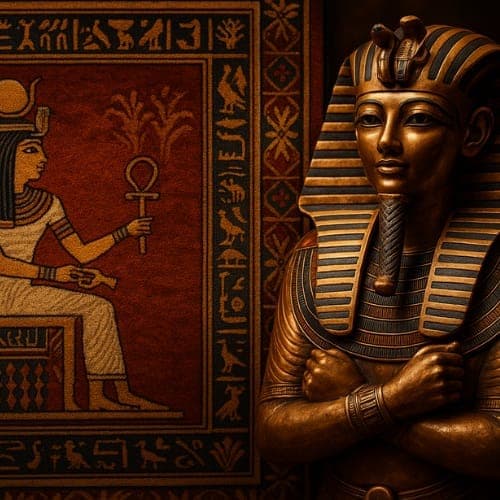
Egyptian rugs featured hieroglyphic patterns and pharaonic symbols, crafted for royal palaces and temples. These early pieces used natural dyes and primitive weaving techniques that laid the foundation for future craftsmanship.
🕌 Islamic Influence
500 BCE - 1500 CE
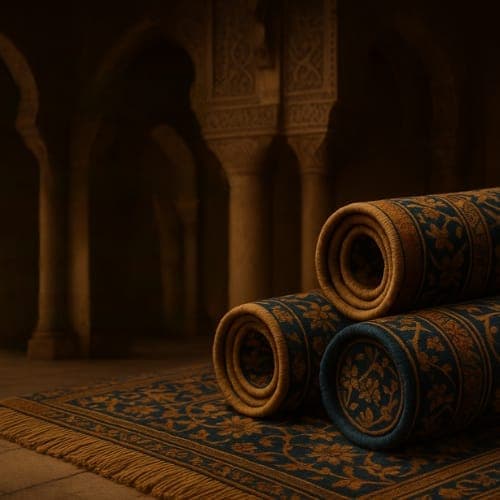
Geometric patterns and arabesque designs emerged, incorporating mathematical precision and spiritual symbolism. This era introduced more sophisticated weaving techniques and complex pattern structures.
🎨 Ottoman Era
1500 CE - 1800 CE
Luxurious materials and intricate floral motifs became prominent, with silk and gold thread embellishments. This period saw the introduction of more refined materials and advanced dyeing techniques.
✨ Modern Mastery
1800 CE - Present
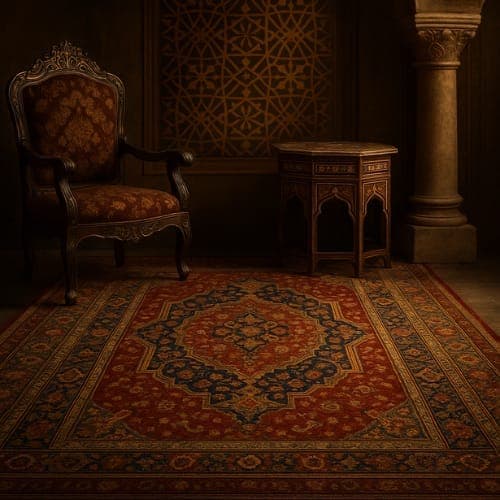
Contemporary Egyptian rugs blend traditional techniques with modern aesthetics, incorporating innovative materials while preserving authentic craftsmanship methods passed down through generations.
Daily Care & Maintenance
Simple daily practices that will keep your handmade rugs looking beautiful for generations
Regular Vacuuming
Vacuum your rug 2-3 times per week using a gentle setting. Avoid beater bars that can damage delicate fibers.
Sunlight Protection
Rotate your rug periodically to prevent uneven fading. Use curtains or blinds to protect from direct sunlight.
Spill Prevention
Blot spills immediately with a clean, white cloth. Never rub or scrub, as this can spread the stain.
Professional Deep Cleaning
Our expert craftsmen use traditional Egyptian cleaning methods that have been perfected over centuries to preserve your rug's natural beauty and extend its lifespan.
Natural Fiber Preservation
Gentle cleaning that maintains wool and silk integrity
Color Restoration
Revive original colors using traditional dye-safe methods
Structural Integrity
Maintain rug foundation and prevent unraveling
Cleaning Frequency Guide
Stain-by-Type Treatment Guide for Egyptian Rugs
Acting quickly is the single most important factor in stain removal. Egyptian rugs use natural wool and silk fibres that are porous — the first 60 seconds after a spill determine whether a stain becomes permanent. Below is a specific treatment protocol for the six most common household stains.
Red Wine
Immediate Action
Blot immediately with a clean white cloth — never rub. Work from the outside inward to contain the stain.
Recommended Cleaner
Mix 1 tsp dish soap + 1 tsp white vinegar + 1 cup cold water. Apply with a cloth, blot, repeat.
Avoid
Hot water (sets the stain), rubbing, bleach-based sprays.
Coffee & Tea
Immediate Action
Blot up as much liquid as possible while still wet.
Recommended Cleaner
Cold water first, then a solution of 1 tbsp white vinegar + 1 tbsp dish soap in 2 cups warm water.
Avoid
Scrubbing the fibres — this spreads tannins deeper into the pile.
Pet Urine
Immediate Action
Absorb as much as possible with paper towels immediately. The longer urine sits, the more the ammonia damages wool dyes.
Recommended Cleaner
Enzyme-based pet cleaner (e.g. Nature's Miracle). Follow with a light white vinegar rinse to neutralise alkalinity.
Avoid
Steam cleaners — heat sets protein stains and permanently bonds urine salts to wool.
Oil & Grease
Immediate Action
Sprinkle cornstarch or baking soda generously over the stain and leave for 15 minutes to absorb the oil. Vacuum gently.
Recommended Cleaner
A small amount of dry-cleaning solvent on a white cloth, dabbed (not poured) onto the stain.
Avoid
Water-based cleaners for oil stains — they can spread grease further into the weave.
Mud & Dirt
Immediate Action
Let the mud dry completely before attempting any cleaning. Attempting to clean wet mud spreads it deeper into the pile.
Recommended Cleaner
Once dry, break up the crust with a spoon, vacuum, then treat residual stain with cold water and mild dish soap.
Avoid
Cleaning while wet — always wait for mud to dry first.
Ink
Immediate Action
Do not wet the stain first. Apply rubbing alcohol (isopropyl, 70%) to a white cloth and blot from the outer edge inward.
Recommended Cleaner
Rubbing alcohol, applied sparingly. Change cloth sections frequently to avoid re-depositing ink.
Avoid
Water (spreads ink), hairspray (can leave a sticky residue that attracts more dirt).
Critical Warning for Wool & Silk Rugs
Never use bleach, chlorine-based products, or strongly alkaline detergents on Egyptian rugs. Wool and silk have a natural protein structure that alkaline chemicals dissolve — even a single application can permanently weaken fibres and cause irreversible colour bleed. When in doubt, blot with cold water only and call a professional natural-fibre rug cleaner.
Storage & Long-term Protection
Proper storage techniques to protect your investment during seasonal changes or relocation
📦 Storage Preparation
- ●Clean thoroughly before storage to prevent mold and pests
- ●Roll with pile facing inward to protect the surface
- ●Wrap in acid-free paper to prevent color transfer
- ●Store in climate-controlled environment (50-70°F, 40-60% humidity)
🛡️ Protection Measures
- ●Use rug pads to prevent slipping and reduce wear
- ●Apply fabric protector for high-traffic areas
- ●Regular professional inspections for early damage detection
- ●Keep detailed records of cleaning and maintenance history
Seasonal Rotation, Rug Pads & Moving House with Egyptian Rugs
Long-term preservation of an Egyptian rug goes beyond daily vacuuming and occasional cleaning. Rotation schedules, the right underlay, and careful handling during a house move can add decades to a rug's life and prevent the most common causes of permanent wear.
Seasonal Rotation: Equalising Wear and UV Exposure
Rotate your Egyptian rug 180 degrees every 3–6 months. Traffic patterns, furniture weight, and sunlight exposure are never perfectly even across a rug's surface. Rotation ensures that no single section absorbs disproportionate wear or fading. In high-traffic living areas, rotate every 3 months; in bedrooms or low-traffic spaces, every 6 months is sufficient.
Australian summers produce some of the most intense UV radiation in the world, particularly in Queensland. UV light degrades natural wool dyes over time, causing uneven bleaching if a rug remains in the same position. For rugs placed near large north-facing windows, consider UV-blocking window film or rotate more frequently (every 2–3 months) during summer.
If partial fading has already occurred, a professional rug restorer can sometimes colour-correct minor UV damage using natural dyes matched to the original palette — a service worth requesting before any permanent discolouration sets in.
Choosing the Right Rug Pad for Your Floor Type
A quality rug pad protects both the rug and your floor, prevents slipping, and provides cushioning that reduces fibre compression under furniture legs. Choosing the wrong pad material, however, can cause more damage than using no pad at all.
Hardwood & Timber Floors
Use a felt-only pad or felt-and-rubber combination. Pure felt allows micro-movement that prevents the floor finish from being scratched by grit caught between rug and floor.
Tile & Stone Floors
Rubber-backed pads grip tile surfaces without adhesive. Choose open-weave rubber to allow airflow under the rug and prevent moisture trapping, which can cause mould in bathroom-adjacent areas.
Wool & Silk Rugs
Avoid PVC or vinyl pads entirely. PVC off-gases plasticisers that chemically react with natural wool and silk proteins over time, causing permanent yellowing and fibre brittleness.
Replace rug pads every 3–5 years. Compressed or degraded pads lose their non-slip properties and can begin to transfer debris onto the rug's backing.
Moving House with an Egyptian Rug
A handwoven Egyptian rug is one of the most structurally vulnerable items in a house move. Improper handling — folding, standing upright in a truck, or compressing under heavy boxes — can snap warp threads and cause permanent creasing that distorts the pile and changes how the rug lies flat.
- Clean first. Have the rug professionally cleaned before moving. Stains that are minor when fresh become permanent when the rug is rolled up in a warm truck for hours.
- Roll pile-inward. Roll the rug with the pile (the soft, visible surface) facing inward. This protects the pile from abrasion and keeps the rug's natural curve working in your favour rather than against it.
- Use acid-free tissue. Place a layer of acid-free tissue paper inside the roll before and between any layered rugs. Standard packing paper and newsprint contain acids that yellow natural fibres over time.
- Never fold. Folding an Egyptian rug — even once — can break the warp threads (the structural vertical threads running through the rug). A broken warp thread causes a permanent crease that no amount of steaming or weighting can fully resolve.
- Transport flat or rolled. Lay the rolled rug flat in the truck or van. Standing a rolled rug upright for an extended period puts the full weight on a small section of warp threads. If flat transport is not possible, stand it upright only briefly and pad the base.
After the move, unroll the rug and leave it flat for 24–48 hours before replacing furniture. This allows any minor compression to relax and the pile to return to its natural upright position.
Professional Rug Care Services
Trust our expert craftsmen with the care of your precious Egyptian rugs. We offer comprehensive cleaning, repair, and preservation services.